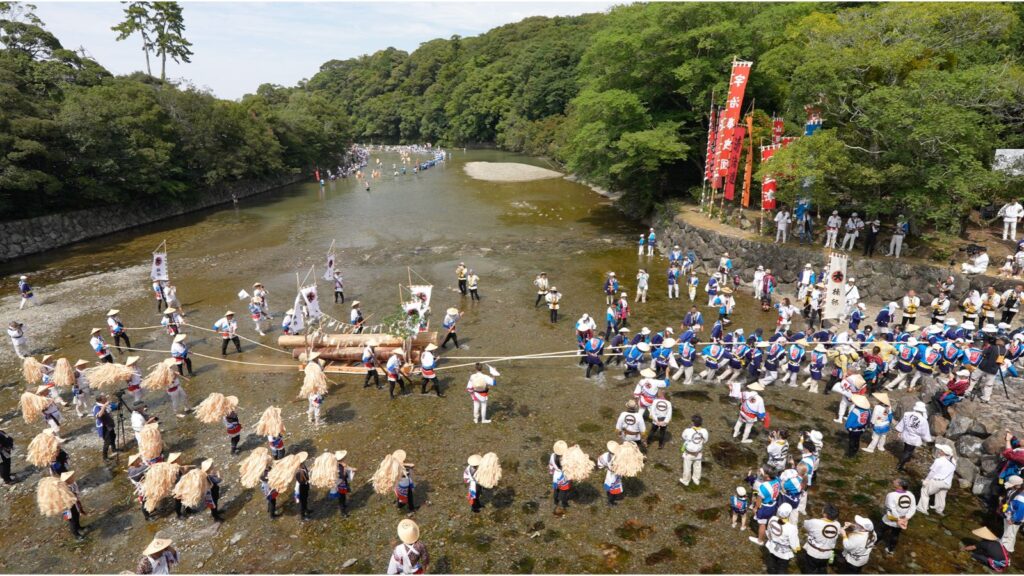
Hundreds of people are standing in the Isuzu River.
Music and rhythmic calls echo across the water.
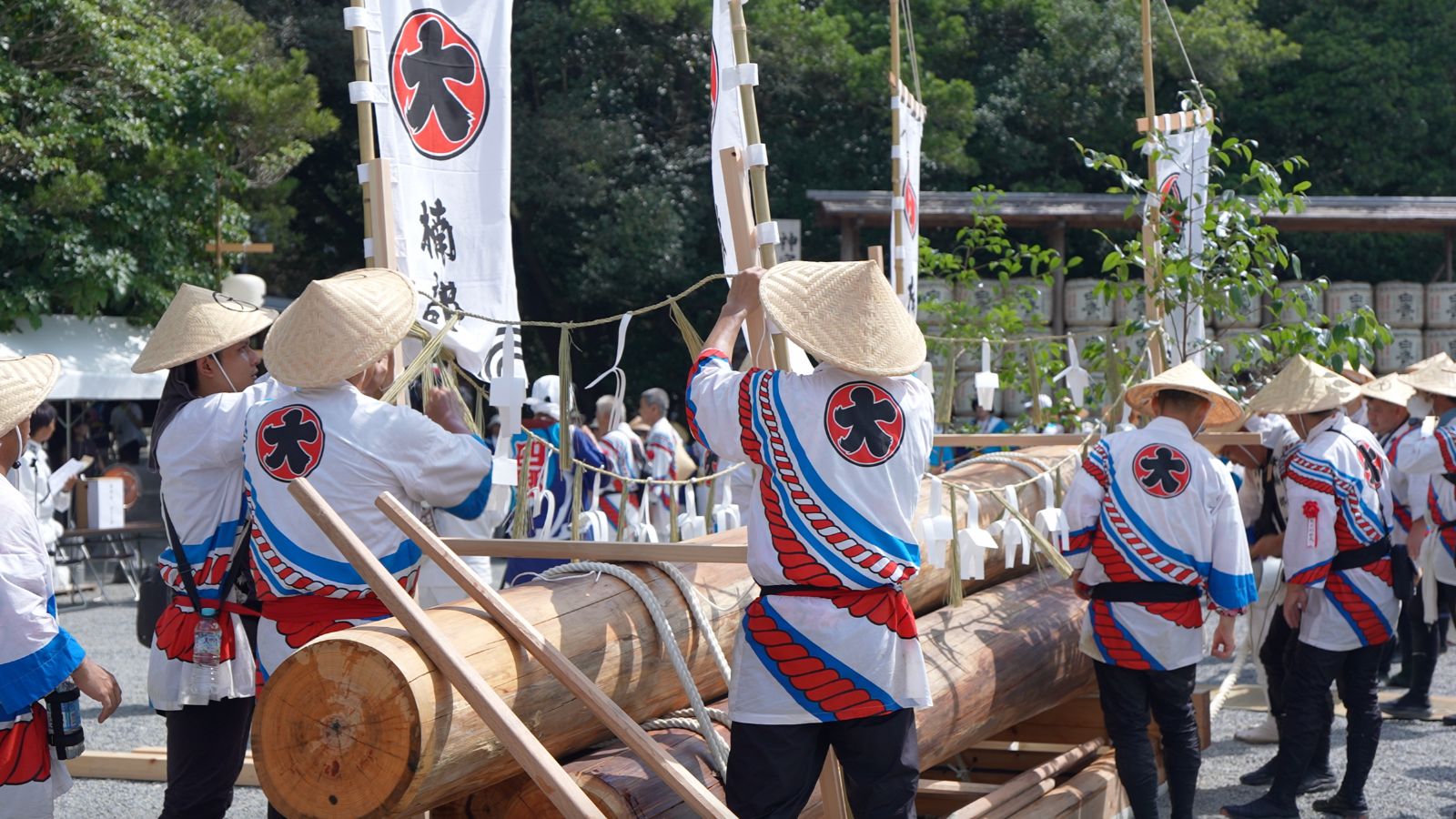
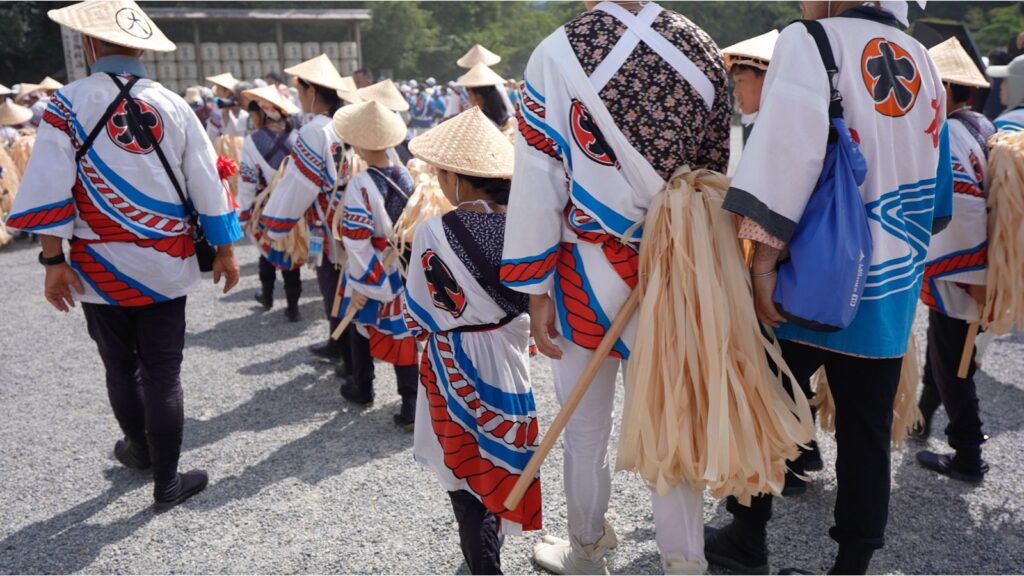
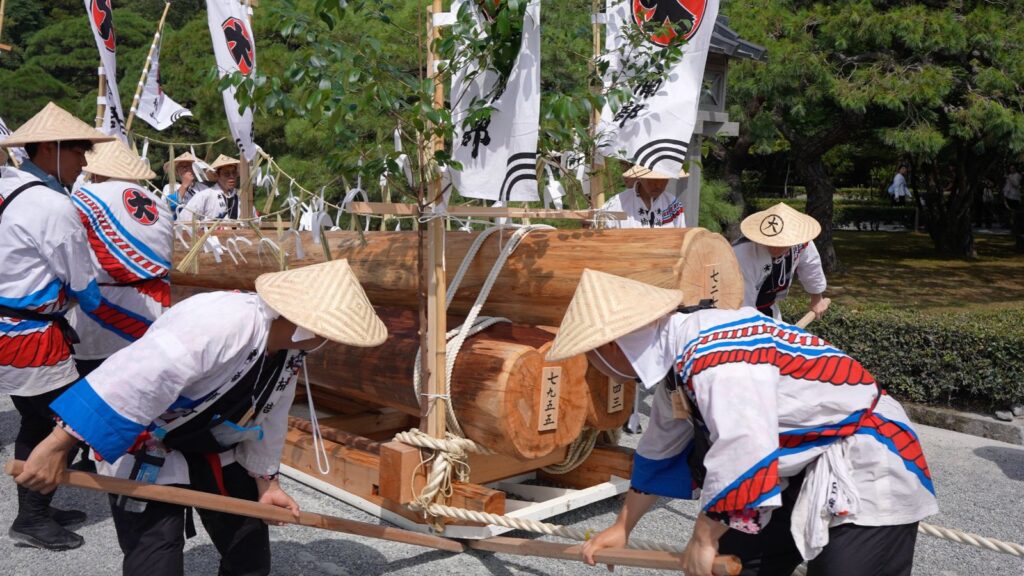
Children and adults wear matching happi coats, while enormous pieces of timber slowly move forward—not with cranes or trucks, but with ropes, wooden boards and human strength.
This is Okihiki.
It is one of the most lively traditions connected with Shikinen Sengu, Ise Jingu’s 20-year cycle of rebuilding and renewal. I had a chance to see it by myself and seeing Okihiki made me understand something much more clearly:
A 1,300-year tradition does not continue by itself. People continue it.
What Is Okihiki?
Okihiki is a traditional event in which sacred timber for the next Shikinen Sengu is brought into the grounds of Naiku and Geku. During the current 63rd Shikinen Sengu, people from Ise’s former shrine-domain communities, together with worshippers from across Japan, take part in pulling the timber into the sacred grounds.
Ise Jingu describes Okihiki as one of the liveliest events of the Sengu cycle.
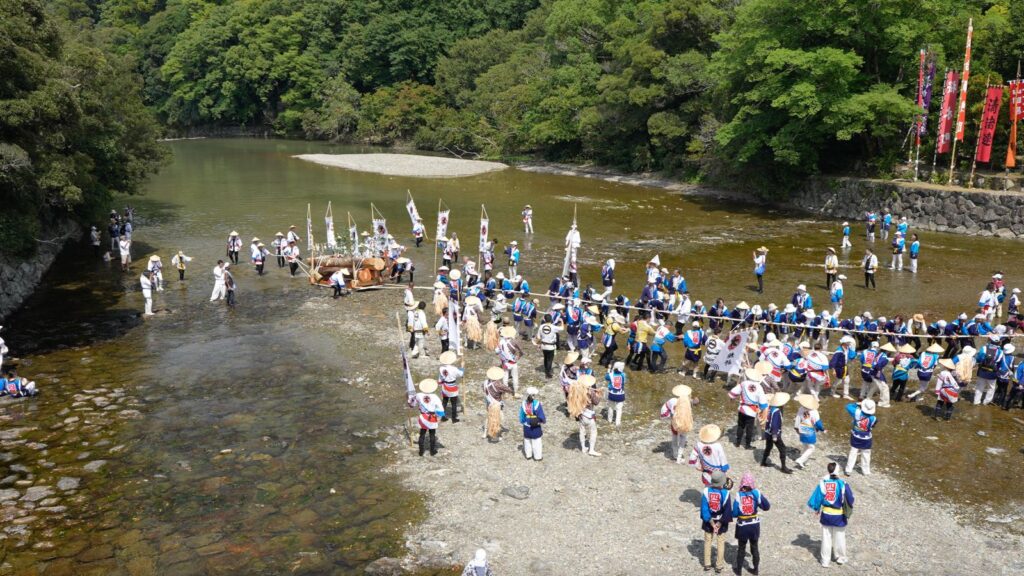
Participants wear coordinated clothing, carry banners, sing traditional kiyari work songs and call out together as the timber moves forward.
For visitors, it is one of the clearest moments when Shikinen Sengu stops feeling like an ancient concept and becomes something happening right in front of you.
How Big Is Okihiki?
For the current 63rd Shikinen Sengu, 72 local Ho’eidan, or timber-pulling groups, have been formed across Ise. Each group represents a neighborhood or local community and carries its own traditions, clothing, banners and ways of taking part in the event.
The scale becomes even clearer when you look at the number of participants.
On just one day of the 2026 Okihiki, around 2,500 members of local Ho’eidan were joined by approximately 1,800 participants from outside the area—more than 4,000 people taking part in a single day.
And the event stretches across many days.
During the previous Shikinen Sengu cycle in 2006 and 2007, around 129,600 people from 77 local Ho’eidan took part over the two years, together with approximately 76,600 additional participants from around Japan.
Kawabiki at Naiku and Okabiki at Geku
Okihiki looks different at Naiku and Geku.
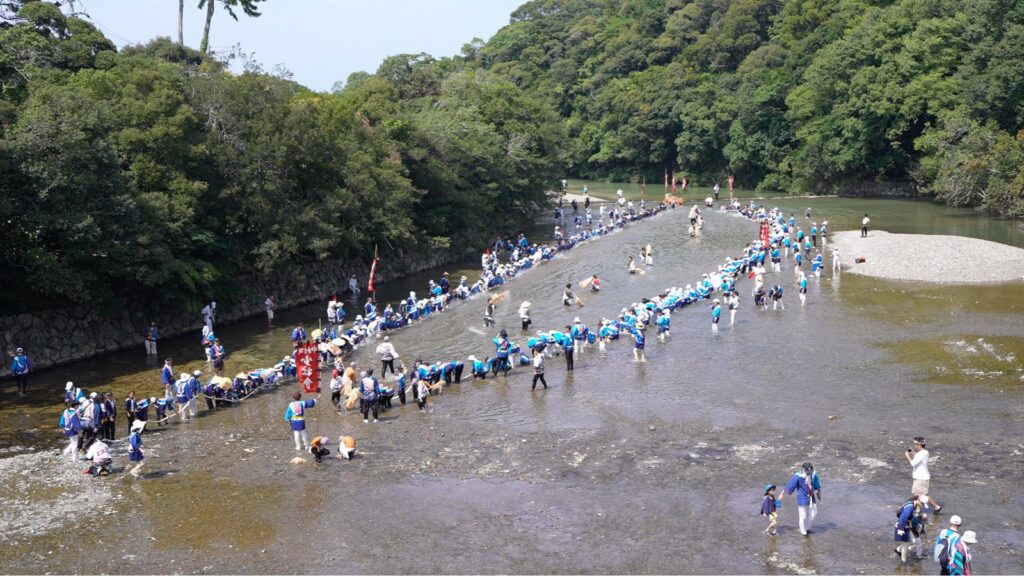
At Naiku, the timber is placed on wooden sleds and pulled through the Isuzu River.
This is called Kawabiki, or “river pulling.”
At Geku, the timber is carried on large wooden carts and pulled over land.
This is called Okabiki, or “land pulling.”
Both have the same purpose: bringing sacred timber into the shrine grounds for the next Shikinen Sengu.
I saw the Kawabiki at Naiku.
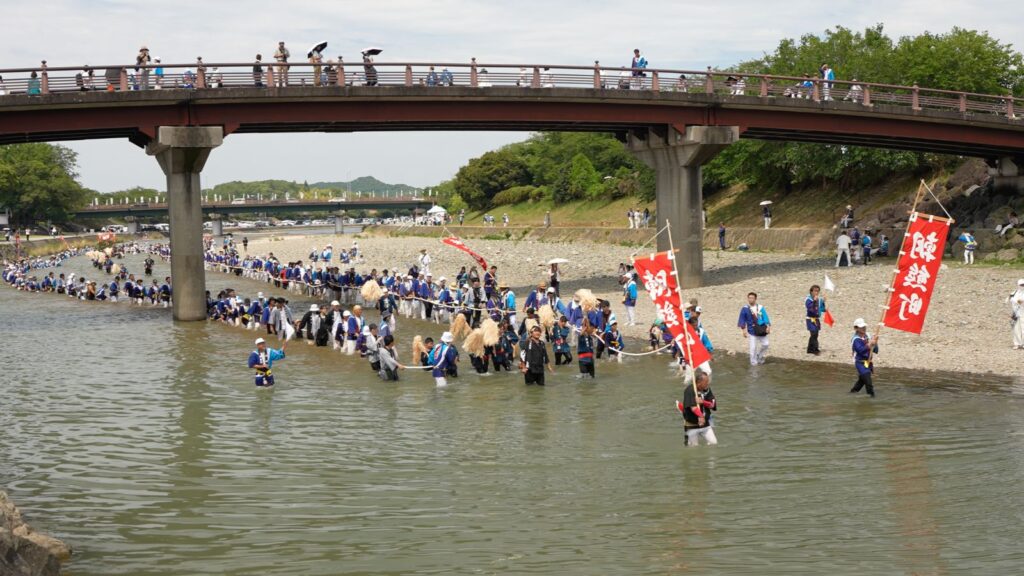
Seeing the Isuzu River Filled With People
There were so many people in the river.
They moved together through the water, pulling the timber while music and powerful calls filled the air.
The atmosphere was incredible.
What surprised me even more was how the timber was being moved.
Not by large machines. But with ropes. Wooden boards.
And human strength.
Watching so many people put their energy into moving one enormous piece of timber made the scale of Shikinen Sengu feel very real.
This was not simply a symbolic ceremony.
People were actually doing the work needed for the next Sengu.
Children in Happi Coats
One of the moments that stayed with me most was seeing children wearing happi coats and taking part. They stood among parents, grandparents and other members of the community.
Watching them, I found myself thinking:
This is how a tradition continues.
Not only through books. Not only through explanations.
But by taking part.
A child who joins Okihiki today grows up having experienced Shikinen Sengu as part of community life.
Twenty years later, that child may participate again as an adult. And perhaps one day with children of their own.
When we hear “a 1,300-year tradition,” the number can feel almost too large to imagine.
But seeing several generations taking part together makes that history suddenly feel very tangible.
The 63rd Shikinen Sengu Is Already Underway
The central transfer ceremonies of the 63rd Shikinen Sengu are planned for 2033.
But the process began years earlier. Related ceremonies started in 2025.
In 2026, the first major Okihiki events were held. At Geku, Okabiki took place from May into June, while Naiku’s Kawabiki was held from late July into early August.
And the story continues.
The second Okihiki series is scheduled for May to July 2027.
Ise Jingu describes it as a rare opportunity for local communities and worshippers from around Japan to participate directly in Shikinen Sengu. That is why visiting Ise now feels particularly interesting.
2033 may sound far away.
But Shikinen Sengu is not waiting for 2033 to begin.
It is already moving toward it.
See Ise Jingu While Shikinen Sengu Is Happening
You do not need to visit during Okihiki to feel the cycle of Shikinen Sengu.
At both Naiku and Geku, you can see the Mishikichi, the alternate sacred site where the next sanctuary will be built.
At Geku, the Sengukan Museum also introduces the architecture, craftsmanship and traditions behind the Sengu cycle.
And during the years leading to 2033, it is worth checking Ise Jingu’s official schedule before your visit.
Okihiki moves sacred timber.
But what stayed with me most was something less visible:
people carrying a tradition from one generation to the next.
Highly recommend to visit Ise Jingu to see a living tradition right now!
If you are new to the tradition, start with:
What Is Shikinen Sengu? Why Ise Jingu Is Rebuilt Every 20 Years →
And if you would like to understand Shikinen Sengu while walking through Geku, Retreatrip’s Ise Jingu Geku Audio Guide introduces the story at the places connected to it.
Explore the Ise Jingu Geku Audio Guide →
五十鈴川の中に、たくさんの人たち。
音楽や威勢のいい掛け声が響き、大人も子どもも法被を着て、大きな御用材をみんなで曳いていきます。
しかも、大きな機械で運ぶのではなく、縄や板、そして人の力で少しずつ前へ進んでいきます。
これが、伊勢神宮の御木曳(おきひき)です。
20年に一度行われる式年遷宮に関わる、とても大切な行事のひとつです。
私は実際に御木曳を見たことで、ひとつ強く感じたことは
1300年の伝統は、自然に続いてきたのではなく、人が続けている。
ということでした。
御木曳とは?
御木曳は、次の式年遷宮で社殿に使われる御用材を、内宮・外宮の神域へ曳き入れる伝統行事です。
伊勢の住民である旧神領民を中心に、全国から集まった崇敬者も参加します。
揃いの衣装を身につけ、のぼり旗を掲げ、木遣り唄を歌い、
「エンヤ!」という掛け声を響かせながら御用材を運びます。
伊勢神宮でも、遷宮諸祭・行事の中でも特に賑やかな行事として紹介されています。
式年遷宮が「昔から続く伝統」ではなく、
今、実際に人々が参加して進めている営み
であることを、とても分かりやすく感じられる行事です。
御木曳はどれくらいの規模?
今回の第63回神宮式年遷宮のお木曳では、伊勢市内に72の「奉曳団」が結成されています。
奉曳団とは、それぞれの地域を単位に御用材を曳くグループのこと。
地域ごとに法被やのぼり、木遣り唄、曳き方などがあり、それぞれの伝統が受け継がれています。
参加人数を見ても、その規模がよく分かります。
2026年5月16日の一日だけでも、地元の奉曳団から約2,500人、県内外から参加した特別神領民約1,800人。
合わせて4,000人を超える人たちがお木曳に参加しました。
さらに前回、第62回神宮式年遷宮に向けて2006〜2007年に行われたお木曳では、2年間で77奉曳団・約129,600人が参加。加えて、全国から参加した「一日神領民」も約76,600人にのぼりました。
2年間を合わせると、20万人を超える規模です😳
内宮は「川曳」、外宮は「陸曳」
御木曳は、内宮と外宮で運び方が違います。
内宮では「川曳」。
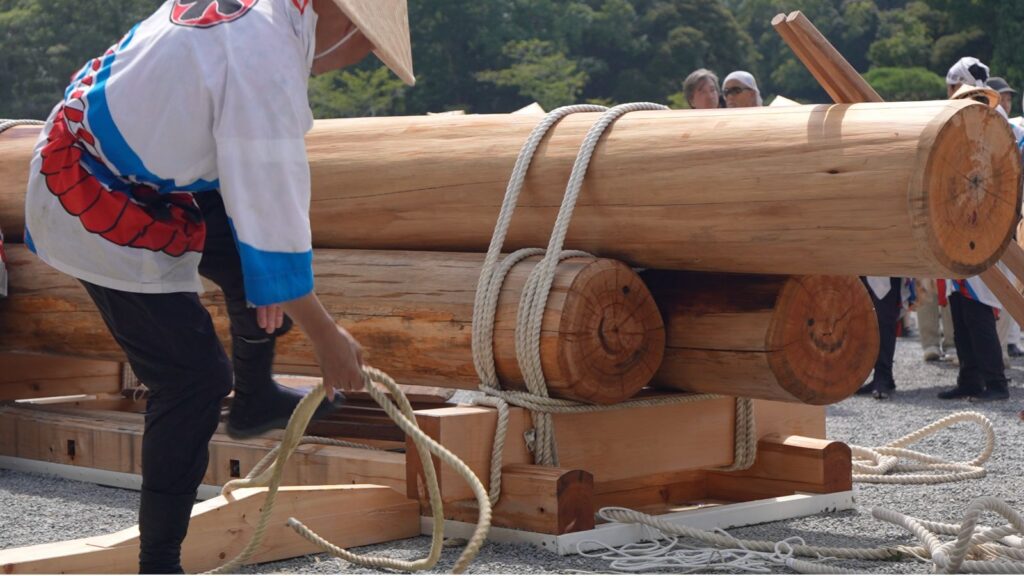
木ぞりに載せた御用材を、五十鈴川の中を進みながら曳いていきます。
一方、外宮では「陸曳」。
奉曳車に御用材を載せ、陸路を通って外宮へ運びます。
どちらも、次の式年遷宮で使われる大切な御用材を神域へ運ぶためのものです。
私が実際に見たのは、内宮の川曳でした。
五十鈴川を埋めるほどの人の熱気
本当にたくさんの方々が五十鈴川の中に入り、御用材を曳いていました。
音楽が流れ、掛け声が響き、みんなで力を合わせながら進んでいく。
その熱気がとにかくすごかったです!
そしてもうひとつ驚いたのが、大きな機械に頼らず、人の力で運んでいることでした。
縄。板。そして人の手。
大きな御用材を動かすために、たくさんの人が同じ方向へ力を合わせる。
見ているだけでも、その大変さとエネルギーが伝わってきました。
法被を着た子どもたち
さらに印象に残ったのが、法被を着た小さな子どもたちも参加していたこと。
親の世代も、さらにその上の世代も、そして子どもたちも一緒にいる。
その光景を見たとき、「こうして伝統は受け継がれていくんだな」と感じました。
実際にその場に参加して、見て、聞いて、一緒に動いて感じて。
そうした体験によって、伝統が自然と次の世代へつながっていくのを目の当たりにしているようでした。
今参加している子どもが20年後には大人になって、次の御木曳ではまた違う立場で参加しているのかもしれません。
1300年という長い年月も、こうしたひとりひとりの人生が繋がっていった結果なのかもしれないと思うと、少し身近に感じられますよね。
第63回式年遷宮は、すでにはじまっています!
次の第63回式年遷宮で中心となる遷御は、2033年に予定されています。
ただ、2025年から関連する祭典が始まっています。
2026年には第一次御木曳行事が行われ、外宮の陸曳は5月から6月、内宮の川曳は7月末から8月初めにかけて行われました。そして、2027年5月〜7月には、第二次御木曳行事が予定されています。
伊勢神宮によると、第二次御木曳についても、旧神領民とともに全国から多くの方々が御用材を奉曳する予定だそうです。
2033年というと、まだ先のように感じます。でも実際には、次の式年遷宮へ向かう時間は、もう始まっているんですね。だからこそ今、伊勢神宮を訪れるのはとても面白いと思います!
今だからこそ伊勢神宮へ
御木曳が行われていない時期でも、伊勢神宮では式年遷宮の流れを感じることができます。
例えば、
内宮・外宮の正宮の横にある御敷地を見る。
外宮のせんぐう館で式年遷宮について学ぶ。
そして、2033年に向けて今どんな祭典や行事が進んでいるのかを知ってから訪れる。
なんだか、ワクワクしてきます!ぜひ一度伊勢神宮へ☺️
式年遷宮そのものについて詳しく知りたい方はぜひこちらも読んでみてください!
式年遷宮とは?伊勢神宮が20年ごとに生まれ変わる理由
またRetreatripのオーディオガイドでは、外宮を実際に歩きながら式年遷宮や御敷地について知ることができます。こちらもぜひチェックしてみてください!
Ise Jingu Geku Audio Guide to Omairi: Ritual, Tradition and Forest →
FAQ
1. What is Okihiki at Ise Jingu?
Okihiki is a traditional event in which sacred timber for the next Shikinen Sengu is pulled into the grounds of Naiku and Geku. Local residents from Ise’s former shrine-domain communities and worshippers from around Japan take part.
2. What is the difference between Kawabiki and Okabiki?
At Naiku, the timber is placed on wooden sleds and pulled through the Isuzu River in Kawabiki. At Geku, it is carried on large wooden carts over land in Okabiki.
3. When is the next Okihiki?
The second Okihiki series for the 63rd Shikinen Sengu is scheduled for May to July 2027. Exact dates and arrangements should be checked on Ise Jingu’s official website closer to your visit.
4. Can visitors watch Okihiki?
Okihiki is held as a large public community event, and visitors can see the processions from designated or appropriate viewing areas. Because routes, dates and access conditions can vary, check current official information before visiting.
5. How is Okihiki connected to Shikinen Sengu?
Okihiki brings sacred timber into Naiku and Geku for the rebuilding work of Shikinen Sengu. It is also one of the few parts of the Sengu cycle in which local communities and worshippers from around Japan can participate directly.
1.御木曳とは何ですか?
次の式年遷宮で使われる御用材を、内宮・外宮の神域へ曳き入れる伝統行事です。伊勢の旧神領民を中心に、全国からの崇敬者も参加します。
2. 川曳と陸曳は何が違いますか?
内宮では、木ぞりに載せた御用材を五十鈴川の中を曳く「川曳」が行われます。外宮では、奉曳車に御用材を載せて陸路を進む「陸曳」が行われます。
3. 次の御木曳はいつですか?
第63回式年遷宮の第二次御木曳行事は、2027年5月〜7月に予定されています。具体的な奉曳日などは、訪問前に伊勢神宮公式サイトで最新情報をご確認ください。
4. 観光客も御木曳を見ることができますか?
御木曳は地域を挙げて行われる大きな行事で、沿道などから見ることができます。ただし、年によって日程やルート、観覧方法が異なるため、必ず最新の公式情報をご確認ください。
5. 御木曳と式年遷宮はどのような関係がありますか?
御木曳では、式年遷宮で新しい社殿を造るための御用材を内宮・外宮へ運びます。また、地域の人々や全国の崇敬者が式年遷宮に直接参加できる数少ない行事でもあります。